
In the digital landscape, speed is not merely a convenience; it is a fundamental requirement for user satisfaction, engagement, and business success. As web pages become richer with high-resolution images, video streaming, and complex scripts, the physical distance between a website’s origin server and its end users has emerged as a critical bottleneck. Every extra millisecond it takes to fetch a digital asset can lead to higher bounce rates, lost revenue, and damaged brand reputation. The internet is built on infrastructure, but that infrastructure is subject to geography. When data must travel halfway around the world to reach a user’s device, latent delays are inevitable. Content Delivery Networks (CDNs) have evolved as a sophisticated and essential solution to this geographical dilemma, optimizing speed by decentralizing content delivery.
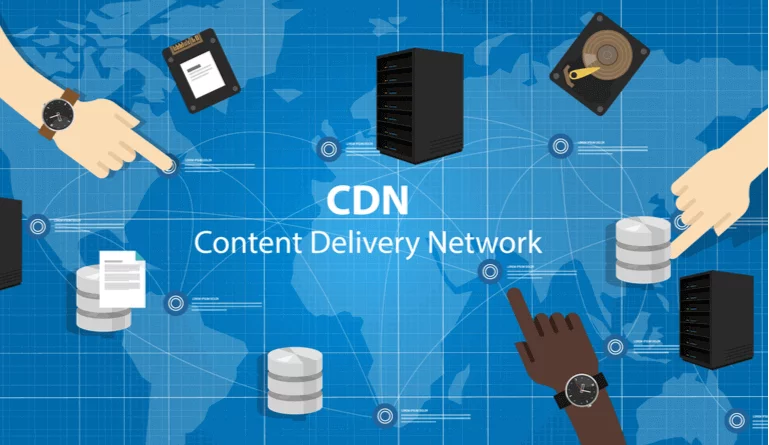
A CDN is essentially a distributed network of proxy servers and their data centers, strategically positioned across the globe. These networks are designed to deliver digital content as quickly as possible. The concept is straightforward: rather than having millions of users all connect to a single central server (often in one continent), a CDN replicates and stores (or ‘caches’) static content—like images, CSS files, JavaScript, and even video—on servers much closer to where those users actually are. When a user requests to view a webpage, the CDN uses an intelligent routing mechanism to find the network node that is physically closest to the user’s location and serves the content from that specific edge server. This process, while complex behind the scenes, happens almost instantly.
Reducing Latency Through Physical Proximity
Latency is the invisible culprit that destroys user perception of website speed. It refers to the time it takes for data packet to make a round trip from the user’s device to the server and back. Latency is fundamentally tied to the constraints of physical distance and the speed of light within fiber-optic cables. Even with advanced global telecommunications, sending data packets across thousands of miles introduces inevitable delay. The ultimate goal of a CDN is to reduce latency by minimizing that trip distance. A web page loading over a thousand miles will always perform slower than one loading from a local network node. By caching resources locally on edge servers, CDNs effectively move the digital content right to the user’s doorstep, bypassing the sluggish long-haul journey.
Offloading Traffic from the Origin Server
Beyond immediate proximity for speed, CDNs offer profound benefits for the origin server, which usually handles the initial website build and all dynamic content. A standard website may contain dozens or even hundreds of static assets. When every user has to download every single one of these assets from the main server, it can quickly become overwhelmed by concurrent requests, leading to server slow-downs or complete crashes during traffic spikes. The origin server is thus heavily constrained. CDNs mitigate this massive risk by directly taking over the delivery of all cached static content. This ‘offloading’ significantly reduces the processing load and bandwidth consumption required from the main application server, allowing it to function much faster and handle dynamic user interaction—such as user logins or shopping cart checkouts—far more efficiently. The main server can concentrate on critical backend tasks rather than serving repetitive static images to everyone.
Optimizing for Mobile Performance and Cellular Latency
The imperative of speed is amplified exponentially in the mobile world. Mobile device users often access websites and applications over cellular data connections (4G, 5G), which naturally have higher latency than traditional broadband or Wi-Fi networks. Furthermore, mobile user sessions are frequently shorter and more focused; users on a go expect data to arrive immediately. If a page fails to load within a few seconds, they will abandon it. CDNs are exceptionally critical for mobile optimization. By placing cached content deep within internet service provider (ISP) networks and directly at mobile gateway nodes, CDNs overcome much of the high latency inherent to mobile networks. Mobile users get to access content without needing their requests to transverse back across the complex web core, which leads to significantly improved perceived speed on mobile devices.
Enhanced Reliability and Uptime
An additional, crucial speed benefit of a CDN is increased resilience and availability. In traditional hosting models, the origin server represents a single point of failure. If it goes down due to hardware issues, network congestion, or a targeted Distributed Denial of Service (DDoS) attack, the entire website becomes inaccessible globally. This immediate loss of uptime is the worst form of slowness. In contrast, CDNs operate with a built-in redundancy that ensures continuous operation. If one edge server node becomes over capacity or goes offline due to maintenance or attack, the intelligent routing algorithms immediately divert incoming traffic to the next nearest operational edge node. The user rarely even notices a hitch in speed, as the network simply self-heals and continues delivering content. This distributed robustness guarantees that traffic surges don’t slow down the whole experience, thereby maintaining a consistent speed standard globally.
Future-Proofing for Global Audiences
The global nature of digital business means that a company’s next potential customer might be on a different continent. Trying to serve a truly global audience from a single hosting location is fundamentally limited by physics. The importance of CDNs will only continue to increase as more economies around the world gain robust internet access and expect high-performance online experiences. Utilizing a CDN isn’t just about making an existing site run better; it is a prerequisite for competing in an international market where speed is one of the most effective ways to differentiate your product or service.
Frequently Asked Questions
1. What exactly is a CDN edge server?
An edge server is a powerful computer node strategically placed at the connection point between two networks—such as between a large content network and a local ISP or cellular carrier. It serves as a local distribution hub where frequently accessed content is stored or cached.
2. Do CDNs only speed up website images?
No. While images are significant, CDNs cache all types of static content. This including cascading style sheets (CSS) that define the layout, JavaScript files that manage interactivity, downloaded fonts, static HTML pages, and extensive video or audio streaming content.
3. Why doesn’t dynamic content get sped up the same way?
Dynamic content is unique to each specific user or session (like a personalized dashboard or real-time query result). It cannot be permanently cached at an edge server because it is always changing. While CDNs use advanced path optimization to route these dynamic requests to the origin server as quickly as possible, the round trip to the origin cannot be completely avoided.
4. How does a CDN improve website security in addition to speed?
CDNs function as a reverse proxy for all incoming traffic. They can identify and filter out malicious traffic patterns (like DDoS attacks or SQL injections) directly at the edge server nodes, long before the threats can reach the origin application. This security scrubbing also improves speed by ensuring legitimate users aren’t competing with malicious bots for resources.
5. Is a CDN difficult for non-technical users to set up?
Many modern CDN providers have simplified the integration process. Often, it involves a simple change in the website’s DNS records or installing a simple plugin for content management systems. Advanced configurations require more technical skill, but the basic speed benefits can be achieved with relatively low complexity.
6. Can my local website benefit from a CDN if my audience is not global?
Yes. Even if your audience is limited to a single state or country, local network nodes provide faster responses than a single origin point. Furthermore, CDNs provide improved uptime and DDoS protection, and offload traffic from your main server, which all positively impact the speed and performance consistency for all local visitors.
