
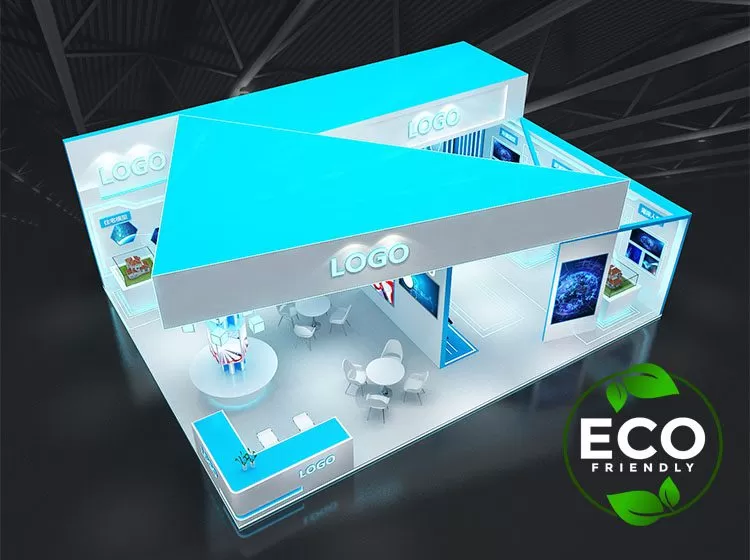
In 2026, trade shows are placing greater emphasis on environmental responsibility, and exhibitors are feeling the pressure to demonstrate that their presence aligns with modern expectations.
Event organisers are tightening sustainability guidelines, visitors are more aware of waste, and internal stakeholders are asking tougher questions about return on investment and long-term value. Together, these factors are changing how businesses approach exhibition design, materials, logistics, and even giveaways.
Sustainable exhibiting is about making better decisions that reduce waste, improve efficiency, and deliver stronger results over time.
Why Sustainability Now Sits at the Centre of Exhibition Planning
For many businesses, exhibitions remain a major investment. Stand build, transport, staffing, accommodation, and marketing materials all add up quickly. When large parts of that investment are used once and discarded, the cost becomes difficult to justify.
Sustainability-focused exhibiting addresses this challenge directly. Reusable structures, modular layouts, and smarter material choices enable businesses to extend the value of their investments while minimising environmental impact.
This shift is being driven by several factors:
- Organisers increasingly favour exhibitors with lower-waste stand solutions
- Sustainability reporting is becoming standard for many organisations
- Visitors are more selective about which brands they engage with
- Marketing teams are under pressure to prove long-term ROI.
Exhibitors who plan with sustainability in mind are finding it easier to meet these expectations without adding complexity to their event schedules.
The Move Away from Single-Use Exhibition Stands
One of the biggest contributors to exhibition waste has traditionally been the use of single-use stand builds. Designed for a single event and a specific floor plan, these stands often require extensive materials and labor, followed by disposal or partial recycling.
In contrast, modular exhibition systems are designed for repeat use across multiple shows. Panels, frames, lighting, and structures can be reconfigured to suit different stand sizes and layouts, while maintaining a consistent brand presence.
This approach delivers practical benefits:
- Reduced material waste across multiple events
- Lower long-term build costs
- Faster installation and dismantling
- Consistent branding across venues.
Many exhibitors now view modular stands as a long-term asset rather than a one-off expense. Partners such as Plus Exhibition Stands specialise in modular and reusable stand systems that support this strategy, helping businesses exhibit more sustainably while maintaining a premium finish across every event.
Sustainable Design Goes Beyond the Structure
Sustainable exhibiting in 2026 extends well beyond the stand frame itself. Design decisions, graphics, lighting, and furniture all play a role in reducing waste and energy use.
Reusable graphics systems allow brands to update messaging without replacing entire walls. LED lighting reduces power consumption while improving visibility. Modular furniture and storage solutions eliminate the need for repeated sourcing and disposal of materials.
These choices also make life easier for event and marketing managers, with fewer last-minute decisions, fewer suppliers to manage, and a reduction in unexpected costs during setup and breakdown.
A well-planned, sustainable stand supports both efficiency and environmental goals.
Rethinking Exhibition Giveaways and Merchandise
One area where sustainability expectations have shifted significantly is promotional merchandise. Visitors are increasingly selective about what they take away from exhibitions, and many actively avoid low-quality items that end up unused.
Cheap plastic pens, novelty items, and throwaway freebies often create more waste than value. They add to transport costs, clutter storage areas, and rarely contribute to meaningful brand recall.
In 2026, exhibitors are taking a more considered approach by:
- Reducing the volume of physical giveaways
- Choosing higher-quality, practical items with a longer lifespan
- Replacing merchandise with digital content, samples, or experiences
- Focusing on meaningful conversations rather than volume-based lead capture.
This shift aligns closely with sustainable stand design to attract visitors, communicate the brand, and support engagement. When the stand itself does more of the work, there is less reliance on physical giveaways to leave an impression.
Sustainability and Brand Perception Go Hand in Hand
Visitors notice how brands present themselves at exhibitions. A stand that feels thoughtfully designed, well-built, and consistent across events communicates professionalism and credibility.
Sustainable choices reinforce this perception. Reusable systems, clean layouts, and high-quality materials signal that a business plans ahead and values long-term impact.
For business owners and directors, this approach also supports financial confidence. Investment is made in assets that can be reused, refreshed, and adapted, rather than being written off after a single use. For marketing managers, it reduces stress and provides a reliable framework for future events.
Sustainability, when done well, supports brand trust rather than drawing attention to itself. It can give your business a competitive advantage compared to those who don’t consider their environmental impact at these events.
Practical Steps Towards More Sustainable Exhibiting
Exhibitors looking to improve their sustainability credentials in 2026 do not need to overhaul everything at once. Small, deliberate changes can make a meaningful difference.
Key steps include:
- Choosing modular or reusable stand systems
- Designing graphics that can be updated rather than replaced
- Reducing single-use materials and giveaways
- Working with experienced partners who plan for long-term use
- Reviewing transport, storage, and installation processes.
An exhibition partner with experience across multiple venues and event types can guide these decisions, ensuring sustainability supports performance rather than complicating it.
Sustainable Exhibiting as a Long-Term Strategy
Sustainable exhibiting is ultimately about control. Control over costs, consistency, logistics, and brand presentation. In 2026, businesses that treat exhibitions as part of a long-term strategy are better placed to balance environmental responsibility with measurable results.
Reusable stand systems, smarter design choices, and a more thoughtful approach to engagement enable exhibitors to get more value from every show they attend.
As expectations continue to evolve, sustainable exhibiting is becoming a practical advantage for businesses that want to stand out, remain credible, and exhibit with confidence year after year.
