
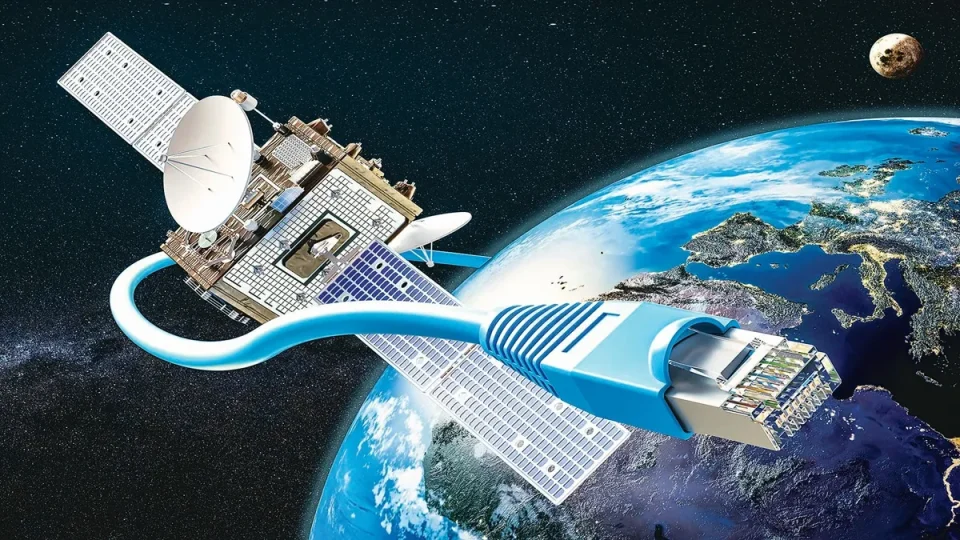
For decades, the internet has been hailed as the great equalizer. Yet, for nearly one-third of the world’s population, the digital revolution has been nothing more than a distant rumor. Traditional internet infrastructure relies heavily on a complex web of fiber-optic cables, underground wires, and massive cellular towers. While this infrastructure thrives in densely populated urban centers, it fundamentally fails in remote, rugged, or economically marginalized regions.
The inability to lay physical cables across vast oceans, dense jungles, and jagged mountain ranges has created a profound societal chasm known as the digital divide. However, a quiet revolution is taking place miles above the Earth. Next-generation satellite internet is fundamentally shifting the paradigm, offering a scalable, rapid, and robust solution to connect the unconnected and level the global playing field.
The Core of the Crisis: Understanding the Digital Divide
To appreciate the impact of satellite technology, one must first understand what it means to be disconnected in a hyper-digital era. The digital divide is not merely an inconvenience; it is a systemic barrier to economic mobility, healthcare equity, and modern education.
In rural or isolated communities, the lack of high-speed internet creates distinct disadvantages:
-
Economic Isolation: Local businesses cannot access global e-commerce markets, digital banking, or remote work opportunities.
-
Educational Deficits: Students are cut off from online research databases, virtual classrooms, and digital literacy tools, putting them generations behind their urban peers.
-
Healthcare Disparities: Remote clinics cannot utilize telemedicine, leaving vulnerable populations without access to specialized medical advice during critical emergencies.
Geographical and financial hurdles are the primary reasons traditional internet service providers (ISPs) ignore these regions. Tearing up ground to lay fiber-optic cables in a village of two hundred people yields a terrible return on investment for commercial corporations. Consequently, rural infrastructure remains stagnant while cities race ahead toward multi-gigabit speeds.
The Satellite Evolution: From GEO to LEO
Satellite internet itself is not a new concept, but the technology driving it has undergone a massive evolution. Historically, satellite internet relied on Geostationary Earth Orbit (GEO) satellites. These massive spacecraft float roughly 22,000 miles above the equator. Because they match the Earth’s rotation, they appear stationary from the ground.
While GEO satellites can cover vast areas, they suffer from two critical flaws:
-
Severe Latency: The immense distance data must travel from Earth to the satellite and back creates a noticeable delay, often exceeding 600 milliseconds. This makes real-time communication, video conferencing, and interactive applications virtually impossible.
-
Bandwidth Limitations: A single GEO satellite must distribute its capacity across entire continents, leading to severe network congestion and capped data usage for consumers.
The game-changer has been the deployment of Low Earth Orbit (LEO) satellite constellations. Operating at altitudes between 300 and 1,200 miles above the Earth, LEO satellites are roughly 30 times closer to the ground than their GEO predecessors.
Because of this proximity, LEO satellites reduce latency to a mere 25 to 40 milliseconds, a speed comparable to terrestrial fiber networks. Instead of relying on one massive satellite, LEO networks utilize “constellations” consisting of thousands of small, interconnected satellites working in tandem to blanket the globe with continuous, high-speed coverage.
Transforming Remote Communities and Economies
The deployment of LEO constellations is already fundamentally changing lives in regions previously deemed unreachable. When a community gains access to high-speed, low-latency internet, the transformation is immediate and measurable.
Empowering Agrarian Economies
In many developing regions, agriculture is the primary source of income. Satellite internet allows farmers to access real-time weather forecasting models, monitor global commodity pricing, and implement smart agriculture technologies like IoT-connected soil sensors. By bypassing predatory local middlemen, farmers can sell their yields directly to larger markets, significantly increasing their profit margins.
Revolutionizing Rural Education
With satellite dishes installed on schoolhouse roofs from the Amazon rainforest to the mountains of Central Asia, classrooms are instantly plugged into the global knowledge ecosystem. Children can participate in live video exchanges with educators worldwide, access open-source textbooks, and learn essential digital skills like coding and data analysis that are vital for the future workforce.
Advancing Telehealth Infrastructure
In times of medical crisis, distance can mean the difference between life and death. Satellite internet enables rural clinics to transmit high-resolution medical imagery, consult with urban specialists via video, and manage digital health records efficiently. During natural disasters, when ground-based cell towers are knocked out, LEO satellite terminals can be deployed within minutes, establishing critical communication lifelines for first responders.
Overcoming Obstacles and Future Horizons
While the potential of satellite internet is immense, the industry faces notable hurdles that must be addressed to ensure long-term sustainability and true global equity.
The initial financial barrier remains a significant challenge. While the monthly subscription costs for satellite internet are dropping, the upfront cost of hardware, such as the satellite dish and router, remains prohibitively expensive for families living below the poverty line in developing nations. To achieve true digital equity, public-private partnerships and government subsidies will be crucial to offset these hardware expenses for marginalized communities.
Furthermore, astronomers have voiced concerns regarding the sheer volume of satellites entering orbit. The reflective surfaces of these spacecraft can interfere with ground-based space observations, and the risk of orbital debris, or space junk, requires strict international regulation and responsible decommissioning protocols by tech manufacturing companies.
Despite these challenges, the trajectory is clear. As manufacturing costs decrease and launch capabilities expand, satellite internet will become increasingly accessible, reliable, and seamless.
Frequently Asked Questions
Can satellite internet completely replace traditional fiber-optic cables?
No, satellite internet is designed to complement rather than replace fiber networks. Fiber-optic cables remain the gold standard for density and raw speed in urban centers. Satellite internet is primarily an architectural solution for rural, remote, and mobile environments where laying physical fiber cables is economically or geographically unfeasible.
How does severe weather affect the performance of LEO satellite internet?
While heavy rain, snow, or dense cloud cover can cause minor signal degradation, a phenomenon known as rain fade, modern LEO systems mitigate this far better than older GEO systems. The proximity of LEO satellites means signals pass through less atmospheric interference, and advanced software allows antennas to quickly dynamically track and switch to alternative satellites with stronger signals.
What hardware is required on the consumer side to use satellite internet?
To connect to a LEO network, consumers require a specialized hardware kit. This typically includes a phased-array satellite antenna dish that automatically tracks moving satellites, a mounting tripod or bracket, a proprietary power supply, and a Wi-Fi router to distribute the signal throughout the home or facility.
How do LEO satellites avoid crashing into one another in space?
LEO satellites are equipped with autonomous collision avoidance systems. Using orbital data tracks provided by space traffic management agencies, these satellites can utilize onboard propulsion thrusters to make real-time orbital adjustments to steer clear of other operational spacecraft or known pieces of space debris.
Is satellite internet suitable for online gaming and live streaming?
Yes. Unlike older satellite technology, modern Low Earth Orbit satellite internet provides latency speeds between 25 and 40 milliseconds. This low delay is well within the acceptable threshold for seamless online multiplayer gaming, high-definition live streaming, and smooth video conferencing applications.
How do these satellites stay powered while orbiting the Earth?
LEO satellites are equipped with highly efficient solar array panels that unfold once the spacecraft reaches its designated orbit. These panels capture solar energy to power the internal electronics and charge onboard lithium-ion batteries, which keep the satellite operational when it passes through the Earth’s shadow.
Can satellite internet terminals operate completely off the power grid?
Yes, the consumer hardware kits can easily be paired with alternative power solutions. In remote areas without electricity, satellite terminals are frequently powered using small solar panel setups or portable generators, making them entirely independent of centralized electrical infrastructure.
